
HEARTWORM DISEASE IN DOGS
Description, Prevention and Treatment
3/6/20263 min read
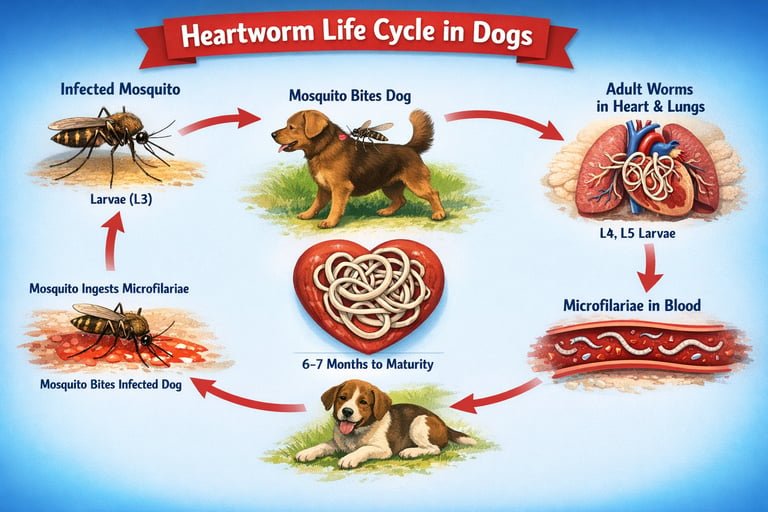
Heartworm disease is a serious and potentially fatal condition caused by parasitic worms called Dirofilaria immitis. These worms live in the heart, lungs, and associated blood vessels of affected animals, causing severe lung disease, heart failure, and damage to other organs in the body.
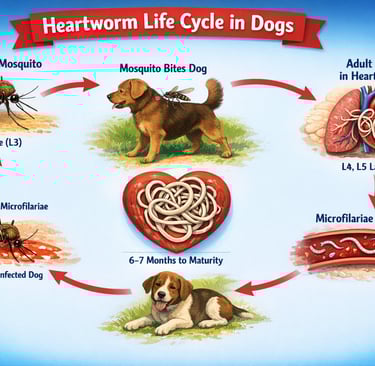
The heartworm lifecycle begins with a mosquito. When a mosquito bites an infected animal (dog, coyote, fox), it ingests heartworm larvae called microfilariae. Over the next 10-14 days, the microfilariae develop into infective larvae within the mosquito.
When the infected mosquito bites another dog, the infective larvae are deposited onto the dog's skin and enter the body through the bite wound. These larvae then migrate through the tissues and eventually reach the heart and lungs, where they mature into adult heartworms. Adult heartworms can grow up to 12 inches long and live for 5-7 years in dogs.
The presence of heartworms in the heart and lungs causes inflammation and damage to these organs. This can lead to:
Reduced blood flow: Heartworms obstruct blood flow, making it harder for the heart to pump blood efficiently.
Lung damage: Inflammation of the lungs can cause coughing and difficulty breathing.
Heart failure: In severe cases, heartworm disease can lead to heart failure.
Damage to other organs: Heartworms can also damage the liver and kidneys.
In the early stages of heartworm disease, many dogs show few or no symptoms. As the disease progresses, symptoms may include:
Persistent cough
Fatigue after moderate activity
Decreased appetite Weight loss Difficulty breathing Swollen belly
Pale gums
In severe cases, sudden collapse or death
Heartworm prevention is much safer and more affordable than treating the disease. There are several FDA-approved heartworm preventives available, including:
Monthly chewable tablets: These are given orally once a month. Examples include Heartgard, Interceptor, Sentinel. Some monthly preventatives also have medicine to control fleas and ticks such as Simparica Trio
Topical medications: These are applied to the skin once a month.
Injectable preventives: These are given by a veterinarian and provide protection for 6 or 12 months. This is a really good option for owners who have a difficult time remembering to give the monthly preventative.
It is crucial to administer heartworm prevention year-round, as mosquitoes can be active even in the winter months in some regions. Consult with your veterinarian to determine the best heartworm prevention option for your dog.
Heartworm treatment is a complex and potentially risky process. It involves a series of injections of an adulticide medication to kill the adult heartworms. During treatment, the dog must be kept strictly quiet to avoid complications. Vigorous exercise or play must be avoided for 12-16 weeks to help avoid complications such as emboli of dead worms. The cost of adulticide treatment can be prohibitive especially in larger dogs since the dose is based on the weight of the dog.
The recommended (American Heartworm Society) is as follows starting at the time of diagnosis
3 months of an ivermectin based heartworm preventative such as Heartgard. This prevents heartworm disease from getting worse and kills the immature stages of the heartworms.
1 month of Doxycycline antibiotic. This kills the bacteria present on adult heartworms and weakens them in preparation for the adulticide injections
1st of 3 melarsomine injections
30 days later, the next two melarsomine injections given 24 hours apart.
The injections are given deep in the muscle of the lumbar area of the back. This area can be sore for several days so avoid petting them in that area.
Treatment can cause side effects, such as:
Lung inflammation: As the heartworms die, they can cause inflammation in the lungs.
Blood clots: Dead heartworms can break apart and form blood clots that can travel to the lungs or other organs. This can cause coughing and other breathing issues. This is more likely to happen if the pet is allowed to be too active.
Allergic reactions: Some dogs may have an allergic reaction to the medication. Fortunately this is rare.
Because of the potential risks and complications, heartworm treatment should always be performed under the supervision of a veterinarian. Before beginning treatment, your vet will perform a thorough examination and run blood tests to assess your dog's overall health.
Heartworm disease is a serious parasitic infection transmitted by mosquitoes that can be fatal to dogs. Prevention is much safer and more affordable than treatment. Year-round heartworm prevention is recommended.
Consult your veterinarian about the best prevention and treatment options for your dog.
Contact
The information provided on this website is intended for general informational and educational purposes only and does not constitute veterinary medical advice. It is essential to consult with a qualified veterinary professional for any health concerns or before making any decisions related to your pet's health or treatment. We are not liable for any actions taken or not taken based on the information provided on this website.
DrRobert@vetcareinfo.io
© 2025. All rights reserved.